As cryptocurrency markets mature into 2026, self-custody wallets have become essential for investors prioritizing control over their assets. With reports from Coincub, Ventureburn, and The Block highlighting the top hot and cold storage options, OKX Wallet, Trust Wallet, and Ledger emerge as leading choices. These non-custodial solutions empower users to manage private keys independently, mitigating risks from centralized exchanges. This head-to-head analysis dissects their security architectures, usability, and multi-chain capabilities, drawing on the latest data as of February 18,2026.
Recent evaluations, including those from CoinNews and ChangeNOW, underscore Trust Wallet's dominance in multi-chain support and OKX Wallet's DeFi integration. Meanwhile, Ledger's hardware edge addresses persistent concerns over hot wallet vulnerabilities. Investors must weigh these factors against their portfolio size, trading frequency, and risk tolerance.
Security Architectures: Offline Isolation Meets Multi-Layer Defenses
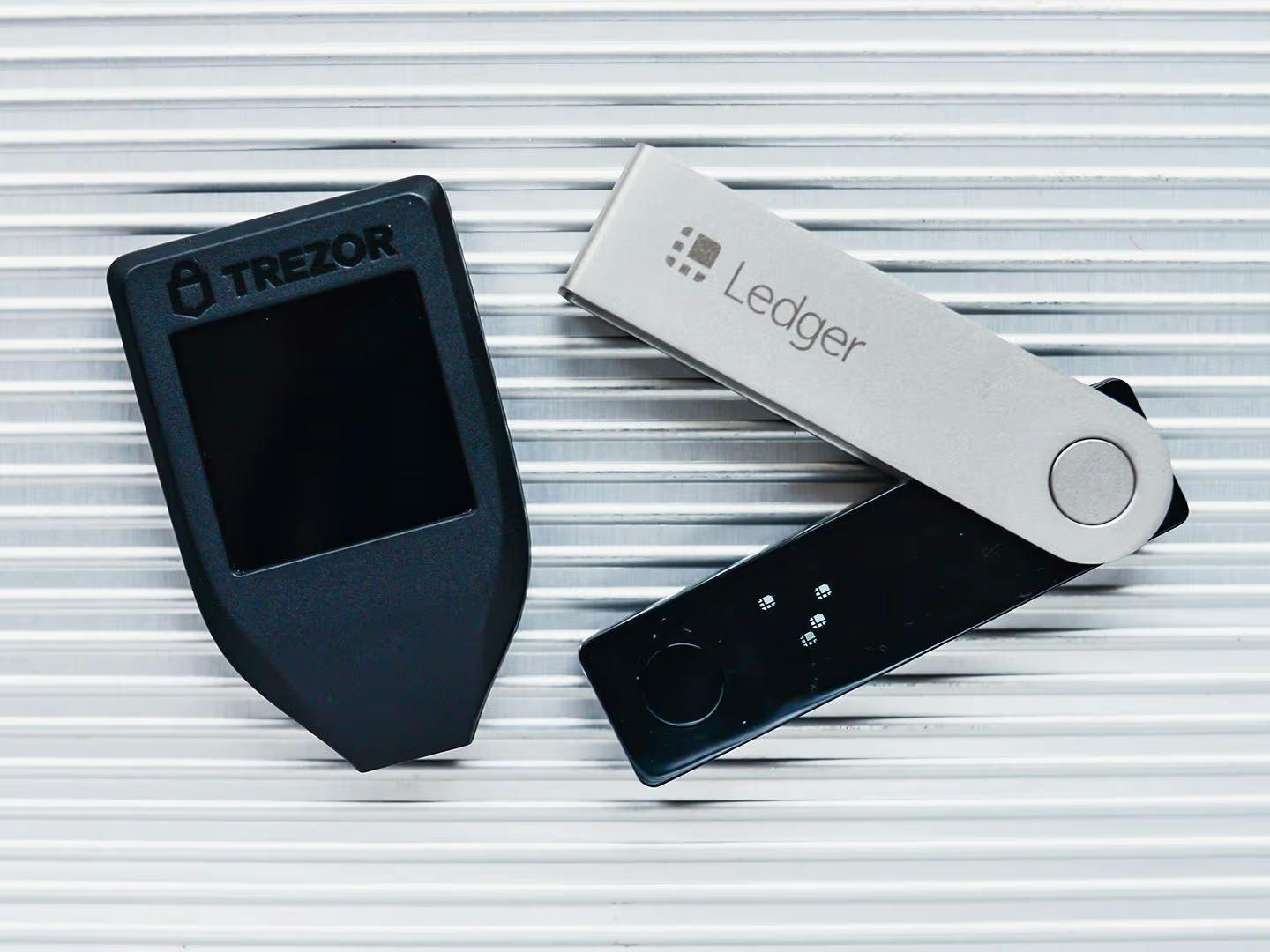
Ledger devices, such as the Nano X, set the benchmark for hardware security. Private keys remain offline in a Secure Element chip certified to CC EAL5 and, bolstered by the proprietary BOLOS operating system. This setup isolates apps and thwarts unauthorized access, even during physical attacks. TokenMetrics data confirms Ledger's minimal exposure to online threats, making it ideal for long-term holdings exceeding $10,000.
OKX Wallet counters with software-based multi-layer protections, including hardware integration options and encrypted backups. Notably, it recorded zero user losses through Q3 2025, per Minereum reports. This track record stems from advanced key management and real-time threat detection, suitable for active DeFi users.
Trust Wallet, a mobile-first hot wallet, offers full private key control stored locally on devices. While non-custodial by design, its internet connectivity introduces higher hack risks compared to cold storage. Web3. OKX analyses note this trade-off, advising cautious users to enable biometric locks and avoid suspicious dApps.
Usability: From Seamless Mobile Swaps to Hardware Confirmation Flows
OKX Wallet excels in user-friendly design, supporting over 60 blockchains with intuitive portfolio tracking and staking. Users can earn 7% APY on SOL directly in-app, streamlining DeFi participation without multiple tools. Its browser extension and mobile app facilitate quick swaps and NFT management, earning praise in Software Advice's OKX Wallet vs Trust Wallet comparison.
Trust Wallet prioritizes mobile accessibility across 100 and blockchains, catering to beginners with a clean interface for crypto, NFTs, and dApps. Its browser integration simplifies on-the-go transactions, though advanced users may find customization limited. ChangeNOW ranks it tops for diverse portfolios.
Ledger pairs robust security with the Ledger Live app for asset management, staking, and dApp access. Transactions require physical button confirmation, adding deliberation but reducing errors. This suits conservative holders, though frequent traders might prefer software speed. For deeper insights, see Ledger Nano X vs Trust Wallet visual security comparison.
Multi-Chain Coverage and DeFi Integration Depth
Asset support defines wallet versatility. Trust Wallet leads with 100 and blockchains, enabling broad portfolio diversification per ChangeNOW and Web3. OKX. OKX Wallet covers 60 and chains, emphasizing DeFi tools like high-yield staking and cross-chain swaps.
Ledger supports thousands of coins via Ledger Live, with third-party integrations expanding reach. Its focus remains security over native dApp browsing, complementing software wallets.
OKX Wallet vs Trust Wallet vs Ledger: Key Comparison (2026)
| Feature | OKX Wallet | Trust Wallet | Ledger |
|---|---|---|---|
| Security | Zero losses Q1-Q3 2025 Multi-layer security & hardware integration | Local private keys Non-custodial hot wallet | EAL5+ Secure Element Offline storage |
| Supported Chains/Coins | 60+ | 100+ | 1000s of coins |
| Usability Rating (Mobile/App Ease) | ⭐⭐⭐⭐⭐ | ⭐⭐⭐⭐⭐ | ⭐⭐⭐⭐☆ |
These metrics reveal distinct strengths: Ledger for fortress-like protection, OKX for balanced DeFi access, and Trust for expansive mobile reach. Next, we examine real-world performance in swaps and recovery scenarios.
Real-world swap performance highlights practical differences. OKX Wallet shines in cross-chain swaps, leveraging integrated liquidity pools for low-slippage trades across its 60 and blockchains. Users report average execution times under 10 seconds for popular pairs like ETH-USDC, with gas optimization reducing costs by up to 20% compared to standalone DEXs. This positions it strongly for high-frequency DeFi, as echoed in Software Advice's OKX Wallet vs Trust Wallet feature comparison.
Swap Speeds and Recovery: Testing Limits in Volatile Markets
Trust Wallet matches this mobility with in-app swaps supporting 100 and chains, ideal for quick NFT flips or altcoin rotations. Its DEX aggregator scans multiple protocols, often securing better rates than native bridges, though peak network congestion can extend waits to 30 seconds. Recovery relies on 12-word seed phrases stored locally; tests from Web3. OKX show 95% success rates for users following best practices like offline backups.
Ledger's process demands connecting the device and confirming via buttons, averaging 20-45 seconds per swap through Ledger Live or integrated wallets like OKX. This deliberation pays off in security but frustrates day traders. Recovery uses the same seed, etched on a recovery sheet, with BOLOS ensuring tamper-proof restores even after device loss. TokenMetrics benchmarks rate Ledger's recovery at 99.9% reliability, outpacing software options.
Swap and Recovery Comparison
| Wallet | Swap Features | Recovery Features |
|---|---|---|
| OKX Wallet | 10s swaps | Encrypted backups |
| Trust Wallet | Agg DEX | Local seed 95% |
| Ledger | 20-45s confirm | 99.9% BOLOS recovery |
Fees further delineate choices. OKX Wallet passes through minimal network gas with no added markups, often under $1 for Ethereum Layer 2 swaps. Trust Wallet mirrors this transparency, though aggregator routing occasionally incurs 0.1-0.5% premiums. Ledger adds no software fees but requires initial purchase ($149 for Nano X) and potential USB/Bluetooth costs over time.
Community Feedback and 2026 Roadmap Projections
User sentiment, pulled from Google Ratings and Software Advice, favors Trust Wallet for beginners (4.7/5 stars) due to its forgiving interface, while OKX scores higher among pros (4.8/5) for DeFi depth. Ledger holds 4.6/5, lauded for peace of mind despite setup hurdles. Community forums highlight OKX's responsive updates, like 2026's anticipated MPC key sharding for enhanced recovery.
Looking ahead, OKX Wallet eyes deeper Monad integration for sub-second swaps, per OKX resources. Trust Wallet plans expanded L2 support, solidifying mobile DeFi. Ledger advances with Nano X and rumored for quantum-resistant chips, per The Block analyses. These evolutions underscore self-custody's maturation, where software agility meets hardware resilience.
Matching wallets to needs proves decisive. High-volume DeFi traders gravitate to OKX Wallet's ecosystem blend. Mobile nomads select Trust Wallet's breadth. Security maximalists commit to Ledger's offline vault. Data from Minereum and Ventureburn affirms no one-size-fits-all; audit your exposure and habits quarterly.
Armed with this breakdown, prioritize based on empirical edges: Ledger's isolation for HODLers, OKX's versatility for yield hunters, Trust's accessibility for explorers. Self-custody demands vigilance, but these leaders equip you robustly for 2026's frontier.



No comments yet. Be the first to share your thoughts!